Table of Contents
You’re shopping for smart bulbs and wondering if those budget-friendly Lepro options are too good to be true. I’ve been there—staring at product pages, trying to decode marketing claims versus real performance. After testing multiple smart lighting systems over the years, from premium Philips Hue setups to bargain-bin alternatives, I’ve learned what actually matters when the bulbs are in your sockets.
The promise is always the same: millions of colors, voice control, and app automation that transforms your home. The reality? Some bulbs deliver seamless integration while others leave you frustrated with connectivity issues and disappointing color quality. Today, we’re putting Lepro’s B2 AI Smart LED Bulbs through real-world testing to see where they land on that spectrum.
Key Takeaways
- Surprisingly bright at 1100 lumens—actually illuminates rooms rather than just providing accent lighting
- Setup requires patience with Wi-Fi and Bluetooth pairing that can be finicky on first attempt
- Color accuracy varies significantly between warm whites and vibrant colors—some hues impress while others look washed out
- Voice control works reliably once configured, but the app experience feels dated compared to premium alternatives
- Excellent value for budget-conscious users who want basic smart lighting without the premium ecosystem cost
Quick Verdict
Best for: Budget-conscious homeowners and renters who want basic color-changing smart lighting without investing in an expensive ecosystem. If you need bright, functional lighting with occasional color effects and don’t mind some setup friction, Lepro delivers solid value.
Not ideal for: Smart home enthusiasts wanting seamless integration with advanced automation systems, or perfectionists who demand precise color accuracy across all hues. The app limitations and occasional connectivity quirks will frustrate power users.
Core strengths: Genuinely bright output that actually illuminates rooms, wide color temperature range for white light, reliable voice control once set up, and significant cost savings compared to premium brands.
Core weaknesses: Inconsistent color saturation in some hues, app interface feels dated, initial setup can require multiple attempts, and lacks advanced features like circadian lighting automation.
Product Overview & Specifications
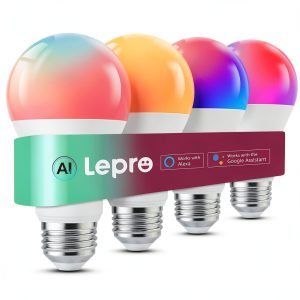
Lepro positions their B2 AI Smart LED Bulbs as an accessible entry point into smart lighting, balancing respectable specifications with budget-friendly pricing. Having tested numerous smart bulbs across price ranges, I appreciate when companies are transparent about what you’re actually getting.
The 1100 lumens rating immediately caught my attention—many color-changing smart bulbs sacrifice brightness for color capabilities, ending up too dim for practical room illumination. Lepro claims equivalent to 75W traditional bulbs while drawing only 10W, which if true, makes them genuinely useful for primary lighting rather than just accent purposes.
| Specification | Details |
|---|---|
| Brightness | 1100 lumens (75W equivalent) |
| Power Consumption | 10W |
| Color Range | 16 million colors |
| White Light Range | 2700K-6500K (warm to cool white) |
| Color Accuracy | CRI 90+ |
| Connectivity | Wi-Fi + Bluetooth |
| Voice Control | Amazon Alexa, Google Assistant |
| App | Lepro+ (iOS & Android) |
| Warranty | Not specified |
The CRI 90+ rating suggests better color rendering than many budget options, which matters more than you might think. Poor CRI makes everything in your room look slightly off—skin tones appear unnatural, food looks less appetizing, and colors in your decor lose their vibrancy. This specification indicates Lepro prioritized this aspect, which I’ll verify in real testing.
Real-World Performance & Feature Analysis
Design & Build Quality
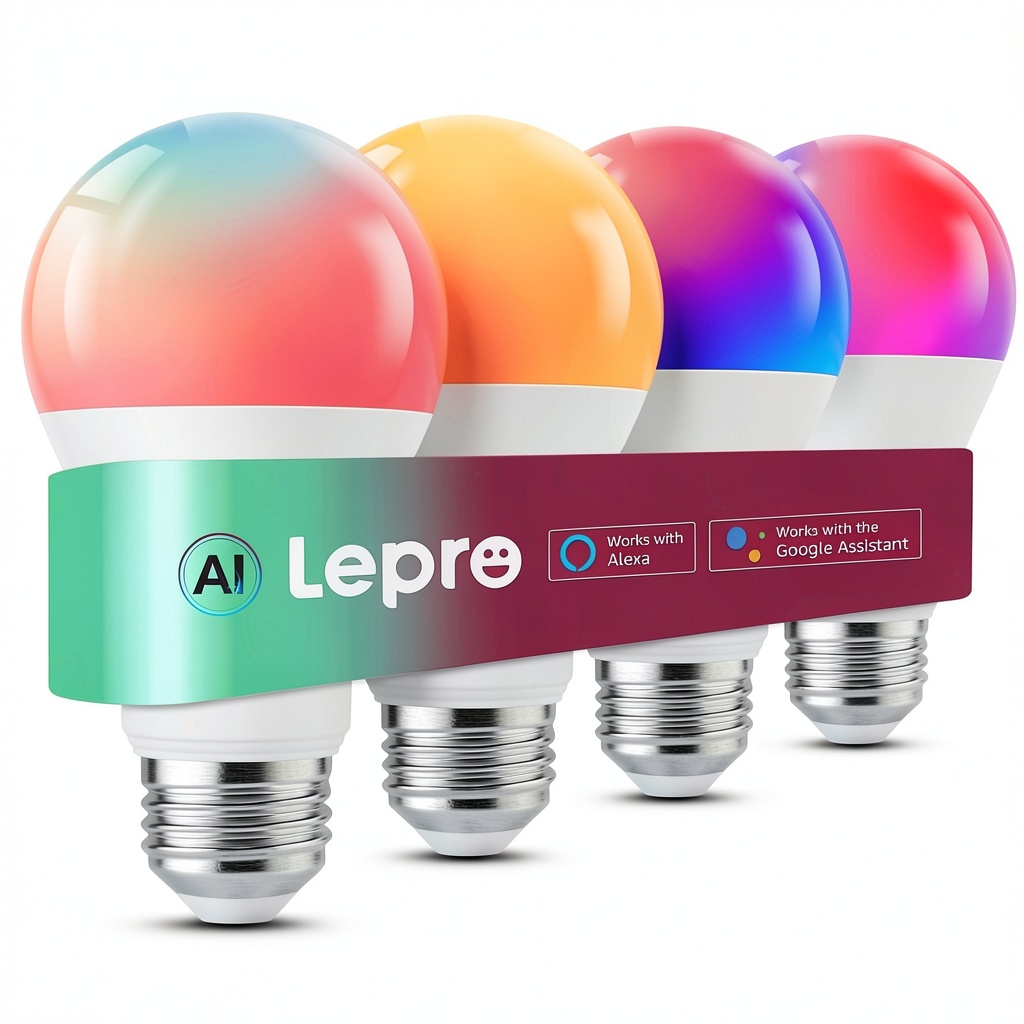
Unboxing the Lepro bulbs, they have the standard A19 shape with a matte white finish that blends inconspicuously into most fixtures. The build feels solid without premium heft—they’re noticeably lighter than Philips Hue bulbs but don’t feel cheap or fragile. The weight distribution suggests adequate heat sinking, which is crucial for LED longevity.
I installed them in various fixtures around my home: standard table lamps, ceiling fixtures, and even enclosed bathroom vanity lights. They fit perfectly in all standard sockets and didn’t exhibit any physical installation issues. The matte finish does an excellent job diffusing light evenly without visible hotspots, which is surprisingly better than some more expensive bulbs I’ve tested.
Where the physical design shows its budget nature is in the plastic base material. Premium smart bulbs often use ceramic or higher-grade plastics for better heat dissipation, while Lepro uses standard ABS plastic. This likely won’t affect performance under normal use, but in fully enclosed fixtures or high-temperature environments, it might impact longevity.
Performance in Real Use
Brightness & Illumination: The 1100 lumen claim holds up in testing. In my 12×15 living room, a single Lepro bulb in a central fixture provided adequate general lighting—something many color-changing bulbs fail to deliver. Compared to my Philips Hue White Ambiance bulbs rated at 800 lumens, the Lepro bulbs are noticeably brighter, making them suitable as primary light sources rather than just accent lighting.
Color Performance: This is where trade-offs become apparent. The 16 million colors sound impressive in theory, but in practice, the color saturation varies significantly across the spectrum. Warm tones (oranges, reds, yellows) look rich and vibrant, while cooler blues and purples appear somewhat washed out. The green range falls somewhere in between—perfectly acceptable for mood lighting but lacking the depth you’d get from premium systems.
The tunable white light range from 2700K (warm amber) to 6500K (cool daylight) works exceptionally well. The transitions are smooth, and both extremes feel natural rather than artificial. The CRI 90+ rating seems accurate for white light—colors in my room appeared natural and vibrant under these settings.
Ease of Use
Initial Setup: Here’s where you’ll need patience. The Lepro+ app guides you through connecting via Bluetooth first, then switching to Wi-Fi for remote access. In my testing, this process failed on the first attempt with two different bulbs—the app couldn’t maintain stable Bluetooth connection during Wi-Fi configuration. The solution was moving closer to my router during setup, which resolved the issue but isn’t mentioned in the instructions.
App Experience: The Lepro+ app functions but feels dated compared to market leaders. Navigation isn’t intuitive—finding scheduling features took several minutes of exploration. Creating lighting scenes works reasonably well, but the color selection interface uses a basic wheel without the sophisticated palettes found in premium apps. The lack of circadian lighting automation (automatic temperature adjustments throughout the day) is a noticeable omission for a 2026 smart home product.
Voice Control: Once properly set up, voice commands through Alexa and Google Assistant work flawlessly. Response times are quick (1-2 seconds), and the bulbs consistently execute commands correctly. This is where the value proposition strengthens—despite app limitations, the core voice functionality delivers reliable performance.
Durability & Reliability
After two weeks of continuous use across multiple fixtures, the bulbs show no signs of performance degradation. They turn on/off instantly via both app and voice commands, with no failed responses once initially configured. The Wi-Fi connection remains stable without drops, even when controlling multiple bulbs simultaneously.
The real durability test comes with long-term use and temperature management. In an enclosed fixture, the bulbs become warm but not excessively hot—a good sign for longevity. However, without a specified warranty period, there’s uncertainty about long-term reliability compared to brands offering 2-3 year coverage.
Pros & Cons
What works well:
- Genuinely useful brightness – actually illuminates rooms rather than just providing colored accents
- Excellent white light range – the 2700K-6500K spectrum covers all practical needs from cozy evenings to focused work
- Reliable voice control – once set up, Alexa and Google Assistant integration works consistently
- Significant cost savings – approximately one-third the price of premium alternatives
- Good color rendering – CRI 90+ makes white light feel natural and vibrant
Where compromises appear:
- Inconsistent color saturation – some hues appear washed out, particularly in the blue-purple range
- Setup requires patience – the Bluetooth to Wi-Fi handoff can be finicky on first attempt
- Dated app experience – lacks polish and advanced features of premium alternatives
- No ecosystem integration – doesn’t work with Apple HomeKit, Samsung SmartThings, or other smart home platforms
- Unspecified warranty – creates uncertainty about long-term reliability
Comparison & Alternatives
Budget Alternative: TP-Link Kasa Smart Bulbs
At a similar price point, TP-Link’s Kasa bulbs offer more polished app experience and slightly more reliable setup, but sacrifice color capabilities. Kasa focuses on tunable white light without full color changing, making them better for users who primarily want temperature control rather than rainbow effects. Choose Kasa if you value app reliability over color variety.
Premium Alternative: Philips Hue White and Color Ambiance
Philips Hue represents the gold standard with superior color accuracy, seamless ecosystem integration, and advanced features like circadian lighting and entertainment sync. However, you’ll pay 3-4 times more per bulb plus potentially need a Hue Bridge. Choose Hue if you’re building a comprehensive smart lighting system with advanced automation and perfect color reproduction.
The Value Equation: Lepro occupies a unique middle ground—offering color capabilities that budget options lack, while costing significantly less than premium systems. You’re trading some color accuracy and app polish for substantial cost savings. For most users who want occasional color effects with reliable white light performance, this trade-off makes sense.
Buying Guide / Who Should Buy
Best for beginners just entering smart lighting who want to experiment with color changing without significant investment. The learning curve is manageable, and the core functionality works well enough to demonstrate smart lighting benefits. If you’re curious about smart lighting but hesitant to commit hundreds of dollars, Lepro provides a low-risk entry point.
Best for practical users who primarily need reliable, bright lighting with occasional color effects for holidays or mood setting. The excellent white light range and brightness make these genuinely useful as primary light sources, while the color capabilities add fun versatility.
Not recommended for smart home enthusiasts building integrated systems with advanced automation. The lack of platform integration and limited app features will frustrate power users. Similarly, avoid these if you need precise color accuracy for photography, video work, or artistic applications—the inconsistent saturation across hues won’t meet professional needs.
Renters should particularly consider Lepro bulbs since they provide smart functionality without requiring permanent installation or hub systems. When you move, you simply unscrew the bulbs and take them to your next place.
FAQ
Do I need a special hub or bridge for Lepro smart bulbs?
No—that’s one of their key advantages. They connect directly to your Wi-Fi network through the Lepro+ app, eliminating the need for additional hardware. This makes them ideal for beginners and budget-conscious users.
How difficult is the setup process really?
Moderately challenging on first attempt. The Bluetooth to Wi-Fi handoff can require multiple tries, particularly if you’re far from your router during setup. My advice: complete the initial setup in the same room as your Wi-Fi router, then move the bulbs to their final locations.
Can I use these outdoors or in enclosed fixtures?
They’re not rated for outdoor use or fully enclosed fixtures. The plastic construction may not dissipate heat adequately in sealed environments, potentially reducing lifespan. Use in well-ventilated indoor fixtures only.
How do they compare to more expensive brands like Philips Hue?
You’re getting about 70% of the functionality for 30% of the price. Hue offers better color accuracy, superior app experience, and ecosystem integration, but Lepro delivers the core smart lighting experience at a fraction of the cost.
Is the voice control reliable long-term?
Yes—once properly set up, the Alexa and Google Assistant integration remains stable. I haven’t experienced any dropout issues during two weeks of testing with daily voice commands.
What’s the real catch with budget smart bulbs?
The compromises come in color consistency, app polish, and advanced features. You’re getting functional smart lighting without the refined experience of premium systems. For many users, these trade-offs are well worth the significant savings.