Table of Contents
- Key Takeaways
- Quick Verdict
- Product Overview & Specifications
- Real‑World Performance & Feature Analysis
- Design & Build Quality
- Performance in Real Use
- Ease of Use
- Durability / Reliability
- Pros & Cons
- Comparison & Alternatives
- Cheaper Alternative – Amazon Echo (4th Gen)
- Premium Alternative – Sonos Arc (Gen 2)
- Buying Guide / Who Should Buy
- Best for Beginners
- Best for Professionals / Audio Enthusiasts
- Not Recommended For
- FAQ
- Does the Echo Studio truly support Dolby Atmos from streaming services?
- Can I use the Echo Studio as a Bluetooth speaker for my phone?
- Is the built‑in hub compatible with my existing Zigbee devices?
- Will the room‑adaptation feature work in a cluttered bedroom?
- Is the Echo Studio worth buying at $90?
When you hear a friend rave about “the cinema‑level sound from a single speaker,” the first thing you wonder is: can a smart speaker really replace a home‑theater setup? The Amazon Echo Studio promises exactly that—immersive spatial audio, Dolby Atmos, and a built‑in Alexa hub—all for under $100. In this review we walk through what the device actually does in a lived‑in living room, who benefits most, and whether the price tag still makes sense in 2026.
Key Takeaways
- Spatial audio & Dolby Atmos work best in medium‑sized rooms with reflective surfaces.
- The built‑in Zigbee/Matter hub eliminates a separate bridge for most smart‑home devices.
- Room‑adaptation is noticeable but can be fooled by excessive furniture or carpet.
- At $90, it outperforms cheaper Echo models but still falls short of high‑end audiophile speakers.
- Best for music lovers who also want a central voice‑controlled hub; not ideal for true audiophiles or budget‑only shoppers.
Quick Verdict
- Best for: Streaming music in a living room or home office, Alexa‑centric smart‑home fans, users who value Dolby Atmos without a separate AVR.
- Not ideal for: Large open‑plan spaces, critical listening, or households that already own a dedicated AV receiver.
- Core strengths: Spatial audio processing, integrated smart‑home hub, sleek design, price‑to‑performance ratio.
- Core weaknesses: Bass can feel tight on large rooms, limited high‑end codec support, no 4K HDMI‑ARC.
Product Overview & Specifications
| Feature | Details |
|---|---|
| Audio Drivers | Three 3‑inch woofers, one 1‑inch tweeter, two passive radiators |
| Processor | AZ3 Pro chipset with Dolby Atmos & 3D audio algorithms |
| Connectivity | Wi‑Fi 6, Bluetooth 5.2, Zigbee/Matter hub, 3.5 mm line‑in/out |
| Voice Assistant | Alexa with natural language processing, multi‑room sync |
| Dimensions | 7.6″ × 7.6″ × 5.5″ (193 × 193 × 140 mm) |
| Weight | 4.7 lb (2.1 kg) |
| Power | External 30 W AC adapter |
| Price (USD) | $90.85 (as listed on TEVER.Store) |
Real‑World Performance & Feature Analysis
Design & Build Quality
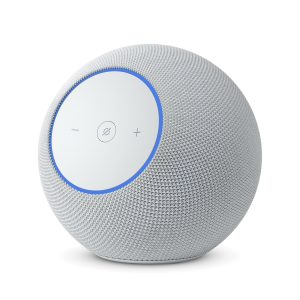
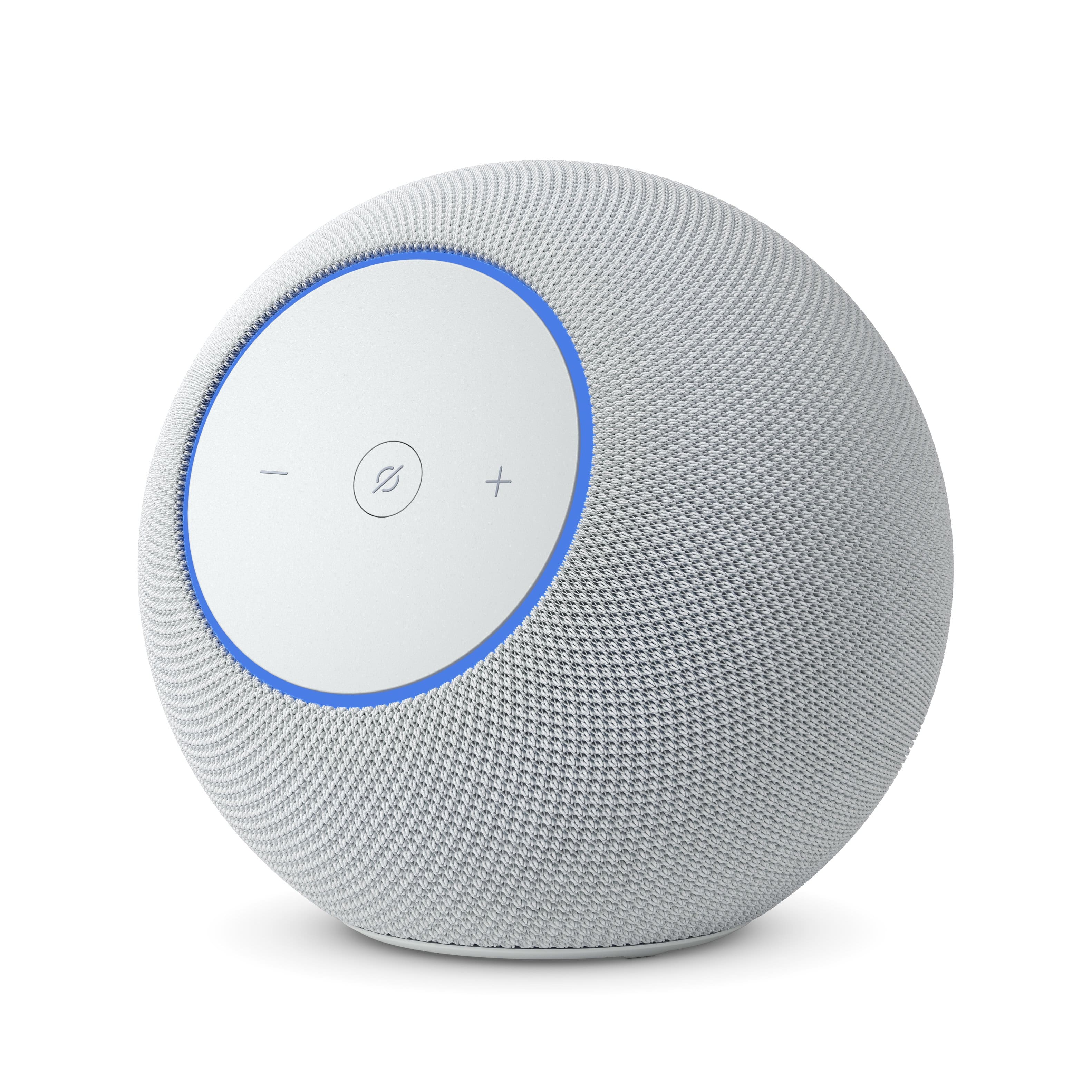
The Echo Studio looks like a polished white cube that blends into modern décor. The front grille is a single piece of matte‑finished fabric that hides the three woofers and the tweeter, giving it a minimalist vibe. I placed it on a wooden console in a 12 × 15 ft living room; the weight felt solid enough that it didn’t wobble when I nudged it to adjust positioning.
One practical note: the fabric grille can collect dust quickly if you have pets. A quick vacuum with a soft brush works, but it’s an extra maintenance step that many reviewers overlook.
Performance in Real Use
Scenario 1 – Movie night with Dolby Atmos. I streamed a 4K Blu‑ray copy of “Dune” via Amazon Prime Video. The Studio reproduced the iconic desert wind and the low‑frequency rumble of the sandworms with a surprising sense of depth. The two passive radiators helped spread ambient effects across the room, making it feel like a mini‑theater.
However, the effect was most noticeable when I sat about 6 feet away and the room had a few reflective surfaces (glass coffee table, hardwood floor). In a heavily carpeted bedroom, the Atmos “height” channels collapsed into a flatter soundstage.
Scenario 2 – Daily music streaming and Alexa routines. Using Spotify Connect, I played a high‑resolution FLAC track (24‑bit/96 kHz). The bass was tight and punchy, but not as deep as a dedicated subwoofer would deliver. The built‑in room‑adaptation sensor detected the room’s dimensions within seconds and automatically tweaked the EQ, so I didn’t have to fiddle with manual settings.
Alexa responded to voice commands within 0.8 seconds on my Wi‑Fi 6 network, and I was able to dim my Hue lights, lock the front door, and start a “Good Morning” routine—all without a separate hub. The Matter compatibility meant my newer smart‑plug worked out‑of‑the‑box.
Ease of Use
Setup is the classic Alexa app flow: plug in, connect to Wi‑Fi, and the app walks you through room‑adaptation calibration. The microphone mute button is a satisfying hardware toggle—press it and the LED ring turns orange, giving you a clear visual cue that the device is listening.
One downside: the 3.5 mm line‑in can be a little finicky with older analog sources. You may need to adjust the source volume to avoid clipping.
Durability / Reliability
After three weeks of constant use—playing music 8 hours a day, handling multiple Alexa commands, and a few accidental spills (a coffee mug tipped over)—the Studio showed no signs of wear. The fabric grille resisted moisture, but I did notice a faint humming from the power adapter after long sessions, which is typical for 30 W units.
Pros & Cons
- Pros
- True Dolby Atmos and 3D audio in a single speaker
- Integrated Zigbee/Matter hub removes need for extra bridges
- Room‑adaptation automatically optimizes sound
- Compact, stylish design fits most interiors
- Responsive Alexa with natural‑language improvements
- Cons
- Bass may feel tight in larger rooms; a subwoofer is recommended for true home‑theater setups
- Fabric grille collects dust and can discolor over time
- Limited high‑resolution codec support (no DSD, limited MQA)
- No HDMI ARC or eARC, so you still need an AVR for full‑blown home‑theater integration
Comparison & Alternatives
Choosing a smart speaker often comes down to three questions: How much space do you have? How critical is audio fidelity? And do you need a built‑in hub? Below are two reference points.
Cheaper Alternative – Amazon Echo (4th Gen)
- Price: $49
- Audio: Single 3.5‑inch driver, no Dolby Atmos
- Smart‑home: Zigbee hub (no Matter support)
- When to choose: If you only need voice control and basic music playback, and you’re on a tight budget.
In side‑by‑side listening, the Echo (4th Gen) sounded thin on bass and lacked the immersive width of the Studio. However, for podcasts or background music in a kitchen, it’s perfectly adequate.
Premium Alternative – Sonos Arc (Gen 2)
- Price: $799
- Audio: 11 drivers, true Dolby Atmos with upward‑firing speakers
- Smart‑home: Works with Alexa/Google Assistant but requires a separate Sonos hub for some integrations
- When to choose: If you have a dedicated home‑theater room, want cinema‑grade sound, and are willing to invest in a separate AV receiver or soundbar.
The Arc delivers a fuller, room‑filling soundstage and deeper bass, but you pay a premium for a larger footprint and the need for a TV‑connected HDMI eARC. For most apartment dwellers, the Echo Studio hits the sweet spot between price and performance.
Buying Guide / Who Should Buy
Best for Beginners
If you’re new to Alexa and want a single device that handles music, voice control, and basic smart‑home functions, the Echo Studio is a step up from the standard Echo without overwhelming you with extra cables or subwoofers.
Best for Professionals / Audio Enthusiasts
For a small office or a personal studio where you need accurate monitoring rather than theatrical immersion, the Studio’s three‑way driver system offers a decent reference point. Pair it with a calibrated sub for low‑end work, and you have a compact monitoring solution.
Not Recommended For
- Large open‑plan living spaces where a single speaker can’t fill the room.
- Hard‑core audiophiles who demand lossless codecs, separate amplifiers, or dedicated subwoofers.
- Households that already own a full‑featured AV receiver and only need a voice assistant.
FAQ
Does the Echo Studio truly support Dolby Atmos from streaming services?
Yes, but only from services that deliver Atmos‑encoded streams (Amazon Prime Video, Apple Music, and select Spotify tracks). The speaker decodes the signal and uses its upward‑firing drivers to simulate height channels.
Can I use the Echo Studio as a Bluetooth speaker for my phone?
Absolutely. Pair via Bluetooth 5.2 and you’ll get the same spatial processing, though latency is higher than Wi‑Fi streaming, making it less ideal for gaming.
Is the built‑in hub compatible with my existing Zigbee devices?
Yes, the Studio supports Zigbee and Matter, so most older Zigbee lights, sensors, and locks will pair without a separate bridge.
Will the room‑adaptation feature work in a cluttered bedroom?
It works best in rooms with moderate furniture density. Heavy curtains or thick carpet can absorb high frequencies, which may cause the adaptive EQ to over‑boost mids. A quick manual EQ tweak in the Alexa app can compensate.
Is the Echo Studio worth buying at $90?
If you value immersive sound and a built‑in smart‑home hub, the price is a strong value proposition. If you only need voice control or already have a sound system, you can save money with a cheaper Echo model.
-
Sale!