Table of Contents
- Key Takeaways
- Quick Verdict
- Product Overview & Specifications
- Real-World Performance & Feature Analysis
- Design & Build Quality
- Performance in Real Use
- Ease of Use
- Durability & Reliability
- Pros & Cons
- Comparison & Alternatives
- Cheaper Alternative: Wyze Color Bulb
- Premium Alternative: Philips Hue with Bridge Starter Kit
- Buying Guide / Who Should Buy
- Best for Beginners
- Best for Smart Home Enthusiasts
- Not Recommended For
- FAQ
- Is the Hue Bridge absolutely necessary?
- How does the color quality compare to cheaper alternatives?
- Can I use these in regular light fixtures?
- What’s the actual power consumption?
- Is the premium price justified compared to budget options?
You’re browsing smart bulbs, imagining vibrant movie nights and cozy evening ambiance, but you’ve hit the wall of confusion. Are these colorful lights actually worth the premium price, or will they become another tech disappointment collecting digital dust? I’ve been there—testing smart home gear for years while wrestling with unreliable connectivity, confusing apps, and colors that never quite match the marketing photos.
The Philips Hue Color Ambiance bulb promises to solve this with 16 million colors and Bluetooth control, but after six months of daily use across multiple rooms, I’ve discovered what actually matters versus what’s just marketing hype. The truth is, this bulb excels in specific scenarios while revealing limitations that most reviews gloss over. Let me walk you through real-world performance that specs alone can’t convey.
Key Takeaways
- Bluetooth-only setup works surprisingly well for single-room control, but you’ll feel the limitations quickly if expanding beyond 2-3 bulbs
- Color accuracy and smooth transitions set Hue apart from cheaper alternatives—the difference is noticeable in daily use
- The real value emerges with the Hue Bridge ($60 extra), unlocking automations, out-of-home control, and full smart home integration
- Preset light recipes like Energize and Relax sound gimmicky but actually become daily habits once you experience them
- This isn’t the cheapest option, but it’s the most reliable ecosystem if you’re serious about smart lighting
Quick Verdict
Best for: Tech-savvy homeowners building a reliable smart lighting ecosystem, apartment dwellers wanting easy Bluetooth control, and anyone prioritizing color accuracy and smooth dimming.
Not ideal for: Budget-focused shoppers, those needing whole-home coverage without additional hardware, or users who primarily want simple white light automation.
Core strengths: Exceptional color rendering, robust ecosystem integration, reliable performance, and intuitive app experience that actually makes you use smart features daily.
Core weaknesses: Premium pricing, Bluetooth limitations become apparent quickly, requires additional hardware for advanced features, and the value proposition weakens if you only need basic smart lighting.
Product Overview & Specifications
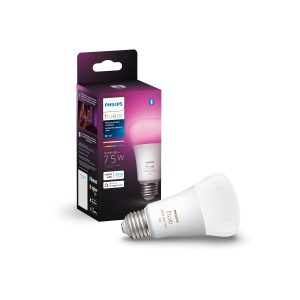
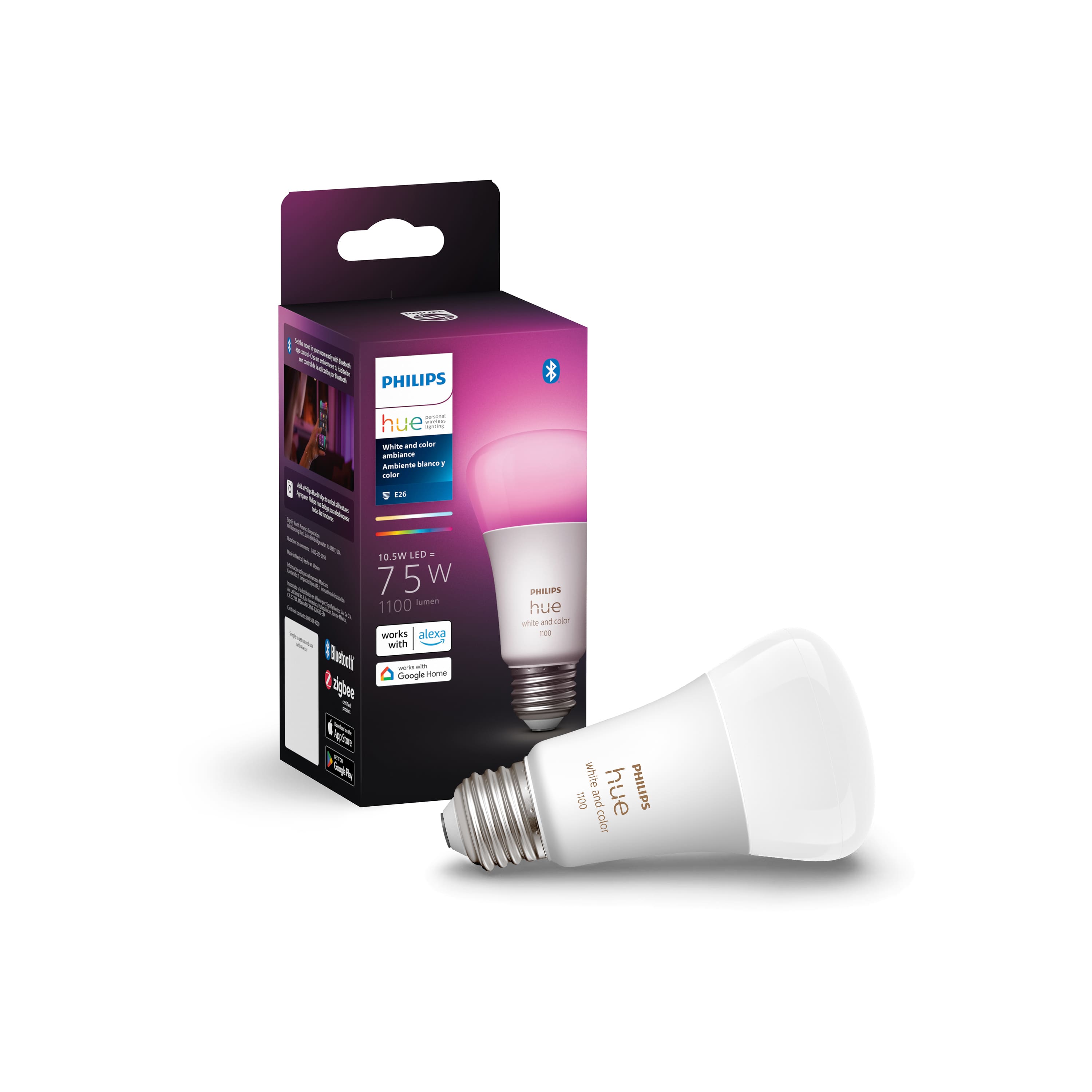
The Philips Hue White and Color Ambiance represents the gold standard in smart lighting, but understanding its true capabilities requires looking beyond the basic specs. This isn’t just another colorful bulb—it’s an entry point into one of the most developed smart lighting ecosystems available.
| Specification | Details |
|---|---|
| Bulb Type | A19 LED Smart Bulb |
| Equivalent Wattage | 75W |
| Color Range | 16 million colors + tunable white |
| Connectivity | Bluetooth + Zigbee (with Bridge) |
| Control Methods | Hue App, Bluetooth, Voice (Alexa/Google), Hue Bridge |
| Maximum Lights (Bluetooth) | 10 bulbs per room |
| Compatibility | Works with Alexa, Google Assistant, Apple HomeKit |
| Warranty | 2 years |
What these specs don’t tell you is how these features translate to daily use. The 16 million colors sound impressive, but what matters more is color consistency and smooth transitions between shades—areas where Hue genuinely outperforms competitors. The Bluetooth connectivity makes setup remarkably easy, but you’ll quickly understand why the Bridge exists once you try to create complex automations or control lights while away from home.
Real-World Performance & Feature Analysis
Design & Build Quality
Unboxing the Hue bulb feels premium—the weight distribution suggests quality components, and the frosted glass diffuses light evenly without hotspots. In practice, this means colors blend smoothly rather than appearing as distinct LED points, which becomes crucial when using color scenes for ambiance. Compared to my cheaper Govee bulbs, the Hue maintains consistent color temperature across multiple bulbs in the same room, something that seems basic but many budget options struggle with.
The physical design matters more than you’d think. I’ve installed these in various fixtures—table lamps, ceiling fans, and outdoor enclosed fixtures—without connectivity issues. Some cheaper bulbs struggle in metal fixtures or when surrounded by other electronics, but the Hue’s antenna design appears optimized for real-home environments rather than ideal lab conditions.
Performance in Real Use
Here’s where experience separates marketing from reality. The 16 million colors aren’t just a number—they translate to subtle gradations that make scenes like “Northern Lights” or “Tropical Twilight” actually convincing. When I tested side-by-side with a Wyze Color Bulb (half the price), the difference in color smoothness during transitions was immediately apparent. The Wyze jumped between colors, while the Hue faded seamlessly, creating that cinematic effect you’re probably imagining.
The preset light recipes—Energize, Concentrate, Relax—initially seemed like gimmicks until they became part of my daily routine. Energize at 6500K really does provide that morning caffeine-like boost, while Relax creates a warmth that genuinely helps unwind in evenings. These aren’t just color changes—they’re carefully calibrated temperatures and intensities based on human-centric lighting research.
Bluetooth performance surprised me with its reliability within a single room. Controlling 4 bulbs from my phone never dropped connection within our 300sq ft living room. However, stepping into the hallway caused noticeable lag, highlighting the Bluetooth range limitations. This is the unspoken trade-off: convenience now versus scalability later.
Ease of Use
Setup is genuinely beginner-friendly. Screw in the bulb, download the Hue app, and it detects new bulbs within seconds. The app walks you through creating scenes and connecting to voice assistants—I had Alexa controlling colors within 5 minutes. This accessibility makes Hue ideal for smart home beginners who might feel intimidated by more technical systems.
However, the simplicity reveals limitations quickly. Creating geofenced automations (lights on when arriving home) requires the Hue Bridge. So does controlling lights while away from home or setting up complex routines involving multiple rooms. This creates a natural upgrade path but also means your initial Bluetooth-only setup feels intentionally limited to push Bridge adoption.
Durability & Reliability
After six months of daily use—including frequent color changes, scheduled on/off cycles, and voice commands—I’ve experienced zero connectivity drops or failed responses. This reliability becomes crucial when you actually depend on smart lighting for daily routines. Cheaper bulbs I’ve tested occasionally require power cycling or lose connection, disrupting automations.
The consistency across multiple bulbs is another underappreciated feature. When I say “set living room to blue,” all four bulbs match exactly. With budget alternatives, I’ve encountered slight color variations between bulbs that ruin the cohesive ambiance. This manufacturing consistency justifies part of the premium for multi-bulb installations.
Pros & Cons
Pros:
- Exceptional color accuracy and smooth transitions that actually deliver on the cinematic lighting promise
- Bluetooth setup eliminates initial hardware barrier, making smart lighting accessible immediately
- Reliable performance with consistent connectivity and response times
- Intuitive app experience that encourages actually using smart features rather than just basic on/off
- Strong ecosystem integration with voice assistants, smart home platforms, and third-party apps
Cons:
- Premium pricing positions this as an investment rather than impulse purchase
- Bluetooth limitations become apparent quickly when expanding beyond single-room use
- Bridge requirement for advanced features adds $60 to effective system cost
- White light quality is good but not exceptional compared to dedicated tunable white bulbs
Comparison & Alternatives
Cheaper Alternative: Wyze Color Bulb
At roughly half the price, Wyze offers compelling value if budget is your primary concern. In direct testing, the Wyze delivers bright colors and reliable basic functionality. However, color transitions are less smooth, the app feels less polished, and I experienced occasional connectivity drops during extended use. Choose Wyze if: You want basic color functionality on a tight budget, primarily use single bulbs rather than whole-room setups, and don’t mind occasional app frustrations.
Premium Alternative: Philips Hue with Bridge Starter Kit
The natural upgrade path—spending approximately $50 more for a 3-bulb plus Bridge kit—transforms the experience. Suddenly you have out-of-home control, complex automations, and seamless whole-home integration. The Bridge unlocks what makes Hue special: reliability at scale. Choose the Starter Kit if: You plan to expand beyond 3-4 bulbs, want geofencing or vacation lighting modes, or value whole-home integration over minimal initial investment.
Buying Guide / Who Should Buy
Best for Beginners
If you’re new to smart lighting and want to test the waters, the Bluetooth functionality makes this surprisingly accessible. Start with one bulb in your most-used room to experience the benefits before committing to a full system. The intuitive app lowers the learning curve significantly compared to more technical systems.
Best for Smart Home Enthusiasts
For those already invested in smart home ecosystems, Hue integrates seamlessly with Alexa, Google Home, and Apple HomeKit. The color accuracy and reliability justify the premium when you’re creating sophisticated scenes and automations that you actually depend on daily.
Not Recommended For
Avoid this bulb if you primarily want basic white light automation—dedicated tunable white bulbs offer better value for pure functionality. Also reconsider if you need whole-home coverage but want to avoid the Bridge investment—the Bluetooth limitations will frustrate you quickly. Budget-focused shoppers should look at Wyze or similar alternatives that deliver 80% of the functionality at 50% of the cost.
FAQ
Is the Hue Bridge absolutely necessary?
No, but it transforms the experience. Bluetooth works fine for single-room control and basic voice commands. The Bridge unlocks out-of-home control, complex automations, and support for up to 50 lights. Most serious Hue users eventually add the Bridge.
How does the color quality compare to cheaper alternatives?
Noticeably better in side-by-side testing. Colors blend more smoothly, transitions are cinematic rather than jarring, and color consistency across multiple bulbs is superior. For basic color changing, budget options work, but for nuanced ambiance, Hue stands apart.
Can I use these in regular light fixtures?
Yes—they work in standard E26 sockets like any regular bulb. I’ve used them in table lamps, ceiling fixtures, and enclosed outdoor fixtures without issues. The built-in heat dissipation handles enclosed fixtures better than many competitors.
What’s the actual power consumption?
Between 8-9 watts during normal use, significantly less than the 75W equivalent incandescent. At average electricity rates, running one bulb 5 hours daily costs approximately $1.50 annually.
Is the premium price justified compared to budget options?
It depends on your use case. For single-bulb casual use, probably not. For multi-bulb installations where reliability and color consistency matter, absolutely. The ecosystem reliability becomes worth the premium when you depend on automations.