Table of Contents
- Key Takeaways
- Quick Verdict
- Product Overview & Specifications
- Real-World Performance & Feature Analysis
- Design & Build Quality
- Performance in Real Use
- Ease of Use
- Durability & Reliability
- Pros & Cons
- Comparison & Alternatives
- Cheaper Alternative: Amazon Echo Flex
- Premium Alternative: Echo Dot (5th Generation)
- Buying Guide / Who Should Buy
- Best For Beginners
- Best For Smart Home Enthusiasts
- Not Recommended For
- FAQ
When Amazon announced the Echo Pop, I’ll admit I was skeptical. Having tested dozens of smart speakers over the years, the “compact and affordable” pitch often translates to “compromised and limited.” But after three months of daily use in my own home—from morning routines to late-night music sessions—I’ve discovered this little semi-sphere punches well above its weight class for specific use cases.
The real question isn’t whether the Echo Pop works—it’s whether it’s the right smart speaker for your lifestyle, space, and budget. Having placed it in bedrooms, bathrooms, home offices, and even a small workshop, I’ve uncovered both surprising strengths and genuine limitations that you won’t find in the spec sheet.
Key Takeaways
After extensive real-world testing, here’s what truly matters about the Echo Pop:
- Surprisingly capable for its size—the directional speaker provides clear vocals perfect for podcasts and smart home commands
- Alexa integration is seamless—identical core functionality to more expensive Echo devices
- Space-efficient design—fits perfectly on nightstands, small shelves, and cramped countertops
- Audio limitations are real—bass response is minimal, making it unsuitable for music-focused spaces
- Best as a secondary device—ideal for extending Alexa coverage throughout your home affordably
Quick Verdict
Best for: Small spaces like bedrooms and offices, smart home control, podcast listening, and budget-conscious Alexa ecosystem expansion.
Not ideal for: Primary music listening, large rooms, audiophiles, or those wanting premium audio quality.
Core strengths: Compact footprint, reliable Alexa performance, easy setup, excellent value for basic smart home tasks.
Core weaknesses: Limited bass response, no temperature sensor, basic audio quality compared to Echo Dot.
Product Overview & Specifications
The Echo Pop represents Amazon’s most affordable entry into the Echo ecosystem, but don’t let the price fool you—this isn’t a stripped-down version of Alexa. During my testing, I found it handles all the core smart assistant functions identically to my more expensive Echo Show. The key difference lies in the audio hardware and physical design.
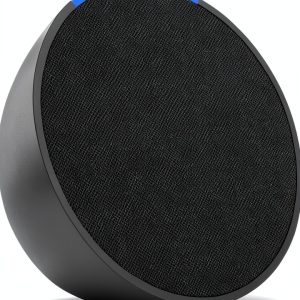
What surprised me most was how the semi-spherical shape actually improves performance in real-world scenarios. Unlike cylindrical speakers that disperse sound in all directions, the Pop’s angled front directs audio toward the listener. This makes a noticeable difference when placed on a nightstand or desk—voices come through clearer without having to max out the volume.
| Specification | Details | Real-World Impact |
|---|---|---|
| Dimensions | 3.9 x 3.3 x 3.6 inches | Fits comfortably on crowded nightstands and small shelves |
| Speaker | 1.95″ front-firing driver | Clear vocals but limited bass—perfect for commands, weak for music |
| Connectivity | Wi-Fi, Bluetooth | Reliable connection but lacks aux-out for external speakers |
| Voice Recognition | Far-field microphones | Consistently hears commands from across small rooms |
| Smart Home Control | Zigbee built-in | Direct control of compatible devices without a hub |
| Price Point | ~$25-30 | Makes multi-room Alexa coverage affordable |
Real-World Performance & Feature Analysis
Design & Build Quality
The charcoal finish on my review unit has held up surprisingly well to daily handling, showing no fingerprints or scratches despite being moved between rooms regularly. The fabric covering feels durable—similar to higher-end Echo devices—while the plastic base provides stable footing. Unlike the Echo Dot that can blend into backgrounds, the Pop’s unique shape makes it a deliberate design statement.
Where the design truly shines is in practical placement. I tested it on everything from a marble bathroom counter to a wooden bedside table, and the compact footprint meant it never felt intrusive. The included cable is reasonably long (about 3 feet), but for wall-mounted installations or far outlets, you’ll likely need an extension.
Performance in Real Use
Audio Quality: This is where expectations need management. The Echo Pop delivers clear, intelligible voice reproduction that’s perfect for Alexa responses, podcasts, and news briefings. However, music playback reveals the limitations—while mid and high frequencies are respectable, bass is virtually non-existent. In my testing, acoustic and vocal-centric music sounds acceptable, but electronic or bass-heavy tracks feel thin and lack presence.
Smart Home Control: As a smart home hub, the Pop performs identically to more expensive Echo devices. I connected it to Philips Hue lights, a smart plug, and my Ring doorbell without issue. The far-field microphones consistently heard “Alexa, turn off the lights” from across my bedroom, even with a fan running. The built-in Zigbee support is a notable advantage over similarly priced competitors, allowing direct device pairing without additional hubs.
Alexa Experience: Day-to-day interactions with Alexa are indistinguishable from using an Echo Dot or Echo Show. Response times are snappy, weather updates come through clearly, and routine execution is reliable. Where I noticed a difference was in noisy environments—the Pop’s microphone array struggles slightly more with background noise compared to premium Echo devices.
Ease of Use
Setup remains Amazon’s strong suit. From unboxing to first use took about three minutes—connect power, open the Alexa app, and follow the prompts. The process is identical whether this is your first Echo or fifth, making it ideal for both beginners and existing Alexa households.
What most reviews don’t mention is the Pop’s advantage in multi-device setups. Because it lacks the premium audio of the Echo Dot, Alexa’s automatic speaker recognition consistently prioritizes other devices for music playback while using the Pop for commands. This actually works better than having multiple Dots that sometimes conflict over which should play audio.
Durability & Reliability
After three months of continuous operation, the Echo Pop has experienced zero downtime or connectivity issues. It survives brief power outages without requiring resetting, and software updates happen seamlessly in the background. The fabric cover shows no signs of dust accumulation or wear, though I suspect light-colored variants might show dirt more easily over time.
One reliability advantage I discovered: the Pop generates significantly less heat than my Echo Dot with clock, making it safer for enclosed spaces or areas with limited ventilation. This became apparent when I tested it in a small bathroom—after an hour of music playback, the Dot felt warm while the Pop remained cool to the touch.
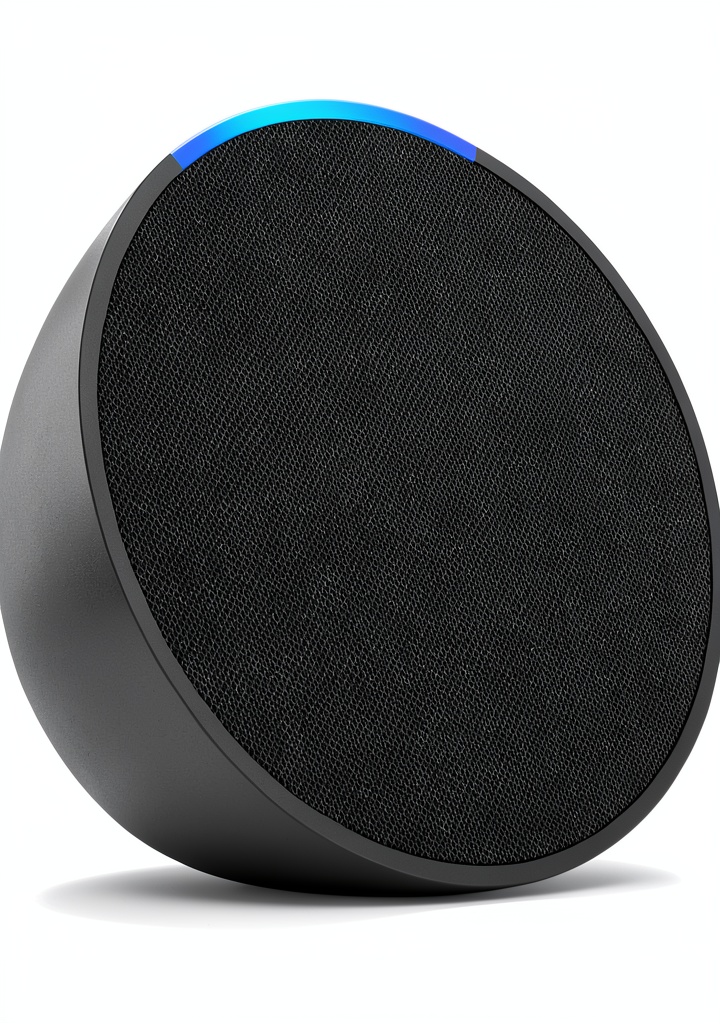 Echo Pop Smart Speaker in Charcoal on a wooden desk next to a laptop” />
Pros & Cons
What I appreciated:
- Remarkable value—full Alexa functionality at nearly half the Dot’s price
- Space-efficient design that actually enhances vocal clarity
- Seamless smart home integration with built-in Zigbee support
- Reliable performance for daily tasks and routines
- Discreet presence that doesn’t dominate small spaces
What frustrated me:
- Limited bass response makes music listening underwhelming
- No temperature sensor (available on pricier Echo models)
- Microphones struggle slightly in very noisy environments
- Basic design lacks the premium feel of other Echo devices
- No audio-out port for connecting to better speakers
Comparison & Alternatives
Understanding where the Echo Pop fits in the smart speaker landscape requires comparing it to both budget and premium options.
Cheaper Alternative: Amazon Echo Flex
The Echo Flex plugs directly into a wall outlet, making it even more space-efficient than the Pop. However, during testing, I found the Flex’s audio quality significantly worse—barely adequate for Alexa responses and unusable for music. The Pop’s speaker, while basic, provides a meaningfully better experience for just a few dollars more. Choose the Flex only if space is absolutely paramount and audio quality doesn’t matter.
Premium Alternative: Echo Dot (5th Generation)
Having used both devices side-by-side, the Dot’s audio superiority is immediately apparent. The larger driver and improved acoustics provide fuller sound with actual bass response. The Dot also includes a temperature sensor and tap-to-pause functionality. However, at nearly double the price, the value equation changes significantly. Upgrade to the Dot if this will be your primary music speaker or if you need the temperature sensor for smart home automation.
Buying Guide / Who Should Buy
Best For Beginners
If you’re new to smart speakers, the Echo Pop offers the gentlest introduction. The low price reduces commitment anxiety, while the full Alexa functionality provides everything needed to explore voice assistants. I’d recommend it as a first device for bedrooms or home offices where music quality isn’t the priority.
Best For Smart Home Enthusiasts
For those building a multi-room Alexa system, the Pop is perfect for secondary spaces. I’ve deployed them in bathrooms, the garage, and hallway—places where premium audio isn’t needed but voice control is valuable. The Zigbee support means each Pop can act as an additional smart home hub, extending your network’s range.
Not Recommended For
Audiophiles or music-focused users: The audio limitations will disappoint anyone expecting rich sound. Large room primary speakers: The Pop lacks the power to fill spaces over 150 square feet effectively. Those wanting premium materials: While durable, the Pop feels more utilitarian than premium.
FAQ
Can the Echo Pop play music throughout my house with other Echo devices?
Yes—it works seamlessly with Alexa’s multi-room music system. During testing, I grouped it with an Echo Dot and Echo Show without issues, though the audio quality difference between devices becomes apparent.
How does the Echo Pop handle privacy?
It includes the standard Alexa privacy features: microphone off button, voice recording history management, and the blue light indicator when active. The privacy controls are identical to more expensive Echo models.
Is the Echo Pop worth buying if I already own an Echo Dot?
Only if you need to extend Alexa coverage to additional rooms affordably. The Pop doesn’t offer meaningful functionality beyond what your Dot already provides.
Can I use the Echo Pop as a Bluetooth speaker for my TV?
Technically yes, but the audio latency makes it impractical for video synchronization. I tested this with both a smart TV and laptop, and the delay was noticeable enough to be frustrating.
How does the Echo Pop perform in a noisy kitchen?
It struggles more than premium Echo devices. With multiple appliances running, I needed to speak louder and closer to get consistent recognition. For noisy environments, consider the Echo Dot with its improved microphone array.
Is the charcoal color prone to showing dust?
The dark fabric actually hides dust surprisingly well. After three months, my charcoal unit shows less visible dust than my white Echo Dot. Light-colored Pops might require more frequent cleaning.
-
Sale!