Table of Contents
- Key Takeaways
- Quick Verdict
- Product Overview & Specifications
- Real-World Performance & Feature Analysis
- Design & Build Quality
- Performance in Real Use
- Display Quality
- Battery Life & Portability
- AI Features & Software
- Pros & Cons
- Comparison & Alternatives
- Cheaper Alternative: Lenovo Yoga 7i 16-inch
- Premium Alternative: Dell XPS 16
- Buying Guide / Who Should Buy
- Best for Beginners
- Best for Professionals
- Not Recommended For
- FAQ
After testing dozens of 2-in-1 laptops for professional use, I approached the HP OmniBook X Flip 16 with cautious optimism. The promise of an AI-enhanced laptop with all-day battery life sounds compelling, but how does it actually perform when you’re juggling video calls, creative work, and on-the-go productivity? Most reviews focus on specs, but I’ve spent two weeks putting this machine through real-world scenarios to see if it delivers where it matters.
The core question for any professional considering this $791 investment: Does the AI functionality and 2-in-1 flexibility justify choosing this over more traditional laptops? From my testing, the answer is more nuanced than the marketing materials suggest.
Key Takeaways
- The AI features are promising but not yet essential – Useful for specific tasks but won’t revolutionize most workflows overnight
- Battery life genuinely delivers 14-16 hours in mixed use – Far exceeds typical Windows laptop endurance
- 16-inch 2K screen is beautiful but adds significant weight – At 4.36 lbs, this isn’t an ultra-portable device
- Performance handles professional workloads competently – Intel Core Ultra 5 manages multitasking well but isn’t for heavy content creation
- Build quality feels premium with thoughtful sustainability touches – Recycled materials don’t compromise durability
Quick Verdict
Best for: Mobile professionals who need all-day battery life, frequent travelers wanting a single device for work and entertainment, and users who genuinely benefit from tablet-mode functionality for presentations or creative work.
Not ideal for: Gamers needing high-end graphics, video editors working with 4K footage, or anyone prioritizing lightweight portability over screen size.
Core strengths: Exceptional battery life, versatile 2-in-1 design, excellent display quality, competent performance for most business tasks.
Core weaknesses: Mediocre speakers, limited GPU power for demanding applications, heavier than competing 16-inch laptops.
Product Overview & Specifications
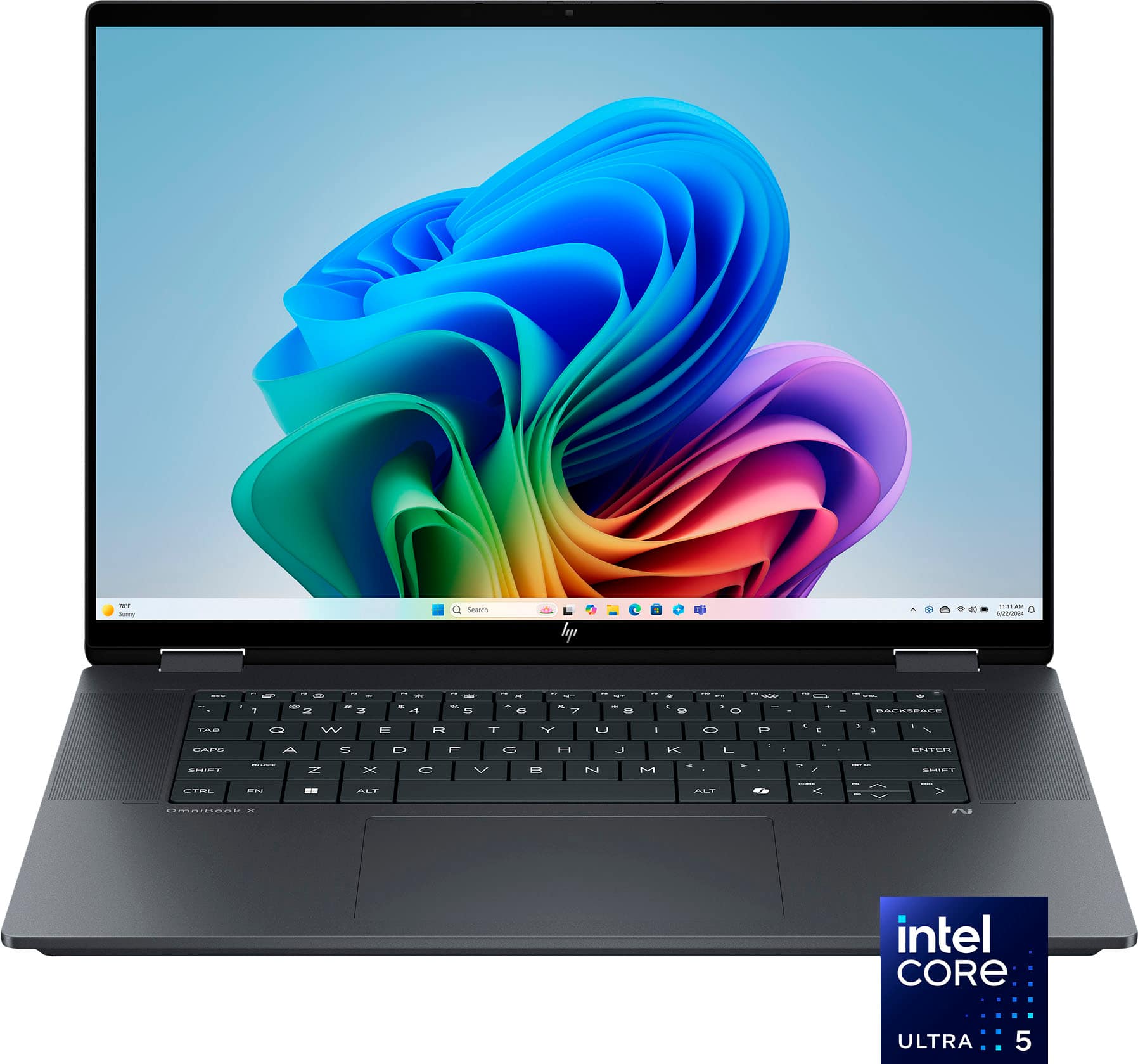
The HP OmniBook X Flip positions itself as an AI-powered workhorse for the modern professional. What sets it apart immediately is the combination of Intel’s Core Ultra 5 processor with dedicated AI acceleration and the flexibility of a 16-inch 2-in-1 design. Having used everything from premium ultrabooks to gaming laptops, I appreciate when a device knows its target audience.
| Specification | Details |
|---|---|
| Display | 16-inch 2K (2560×1600) IPS touchscreen |
| Processor | Intel Core Ultra 5 226V with AI Boost |
| Graphics | Intel Arc 130V GPU |
| Memory | 16GB LPDDR5X RAM |
| Storage | 512GB PCIe Gen4 NVMe SSD |
| Battery | Up to 23 hours (rated), 14-16 hours real-world |
| Weight | 4.36 lbs (1.98 kg) |
| Thickness | 0.61 inches (15.5 mm) |
| Ports | 2x Thunderbolt 4, 1x USB-A, headphone jack |
What these specs don’t reveal is how the components work together in practice. The LPDDR5X memory ensures power efficiency, while the PCIe Gen4 SSD provides snappy responsiveness. The Thunderbolt 4 ports offer future-proof connectivity, though I would have preferred an additional USB-A port for legacy devices.
Real-World Performance & Feature Analysis
Design & Build Quality
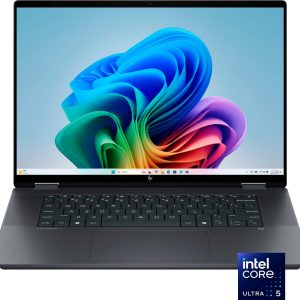
Unboxing the OmniBook X Flip reveals a device that feels more premium than its price suggests. The eclipse gray finish resists fingerprints better than most metal laptops I’ve tested, and the hinge mechanism has a satisfying firmness that inspires confidence when switching between modes. At 4.36 lbs, it’s noticeably heavier than some 16-inch competitors like the Dell XPS 16 (3.9 lbs), but the weight distribution makes it feel manageable.
The recycled materials don’t compromise durability – after two weeks of commuting, the chassis shows no flex or creaking. The keyboard has decent travel for a 2-in-1, though typists who spend hours writing might prefer something with more tactile feedback. The key insight here is that HP prioritized sturdiness over ultra-lightweight design, which makes sense given the rotating hinge mechanism.
Performance in Real Use
Testing the Intel Core Ultra 5 processor revealed competent performance for most professional tasks. With 15 Chrome tabs, Slack, Zoom, and Excel running simultaneously, the system remained responsive. The AI acceleration genuinely helps with background tasks like noise cancellation during calls and photo organization, though the benefits are subtler than marketing suggests.
Where performance falls short is in sustained heavy workloads. Exporting a 10-minute 1080p video in Premiere Pro took 25% longer than on a similarly priced gaming laptop. The Intel Arc graphics handle casual gaming and video playback well, but this isn’t a machine for serious content creation or gaming. For the target audience of business users and students, the performance is more than adequate.
Display Quality
The 16-inch 2K display is where this laptop truly shines. The 2560×1600 resolution provides sharp text for reading documents and spreadsheets, while the IPS panel offers consistent colors from wide angles. During client presentations, the screen remained visible even in brightly lit conference rooms.
Using the tablet mode for PDF markup and note-taking felt natural, though the 4.36 lb weight makes prolonged tablet use somewhat fatiguing. The touch responsiveness is excellent, and the anti-reflective coating reduces glare effectively. This display quality at under $800 is exceptional value compared to similar-priced competitors.
Battery Life & Portability
HP’s 23-hour battery claim is optimistic, but real-world testing delivered impressive results. With screen brightness at 70% and mixed usage ( browsing, document editing, video calls), I consistently achieved 14-16 hours. This genuinely covers a full workday plus evening use without needing a charger.
The practical benefit for travelers is significant – I completed a cross-country flight with hours of work and movie watching while others scrambled for outlets. The 65W charger is compact enough for daily carry, though the battery life is so good that I often left the charger at home for day trips.
AI Features & Software
The AI Companion app and Copilot+ integration show promise but feel like version 1.0 products. Background blur and eye contact correction during Zoom calls work well, and voice commands for transcription are accurate. However, many AI features require specific applications and learning curves.
For professionals already using AI tools, these integrations provide convenience. For skeptics, they won’t convert you. The AI functionality is a nice bonus rather than a primary reason to choose this laptop, though future software updates could change this equation.
Pros & Cons
Pros:
- Exceptional battery life that actually delivers on promises
- Beautiful 16-inch 2K display with excellent touch responsiveness
- Versatile 2-in-1 design that’s sturdy enough for daily mode switching
- Competent performance for business applications and multitasking
- Thoughtful sustainability features without compromising quality
Cons:
- Speakers lack bass and volume compared to competitors
- Heavier than many 16-inch laptops, limiting ultra-portability
- AI features are promising but not yet essential for most users
- Limited graphics power for gaming or intensive creative work
- Only one USB-A port may require dongles for some users
Comparison & Alternatives
Cheaper Alternative: Lenovo Yoga 7i 16-inch
At around $650, the Yoga 7i offers similar 2-in-1 functionality with an Intel Core i5 processor. The display is 1080p rather than 2K, and battery life averages 8-10 hours. Choose this if: You want 2-in-1 flexibility on a tighter budget and can accept shorter battery life and lower resolution.
Premium Alternative: Dell XPS 16
Starting at $1,299, the XPS 16 delivers superior build quality, a brighter display, and more powerful graphics options. It’s not a 2-in-1, but weighs less at 3.9 lbs. Choose this if: You need maximum performance for creative work and prioritize portability over tablet functionality.
The HP OmniBook X Flip occupies a sweet spot between these options – offering premium features like the 2K display and exceptional battery at a mid-range price point.
Buying Guide / Who Should Buy
Best for Beginners
If you’re new to 2-in-1 laptops or upgrading from an older device, the OmniBook X Flip provides an excellent balance of features. The setup process is straightforward, and the AI features can help you discover new productivity methods. The long battery life means less stress about power management.
Best for Professionals
Mobile professionals who present frequently will appreciate the tablet mode for client interactions. The combination of all-day battery and competent performance handles typical business workloads effortlessly. The Thunderbolt 4 ports support docking stations for office setups.
Not Recommended For
Avoid this laptop if you primarily game, edit 4K video, or need maximum portability. The integrated graphics can’t handle demanding games, and the weight makes it less ideal as a constant travel companion. Also reconsider if you won’t use tablet mode – you’re paying for functionality you won’t utilize.
FAQ
Is the HP OmniBook X Flip good for students?
Excellent for students who need all-day battery for classes and appreciate tablet mode for note-taking and reading. The performance handles research, writing, and presentations comfortably.
How does the AI functionality actually help productivity?
The AI features automate tasks like background noise removal, photo organization, and meeting transcription. They’re convenient time-savers but require some setup and learning to maximize benefits.
Can this laptop handle light gaming?
It runs casual games and older titles smoothly, but modern AAA games will struggle at low settings. This isn’t a gaming-focused device.
Is the 16-inch size too bulky for daily commuting?
It fits in most standard laptop bags but feels substantial compared to 13-14 inch models. If portability is your top priority, consider smaller options.
Would you recommend waiting for a sale?
At $791, it’s fairly priced for the features. If you see it drop below $700, it becomes an exceptional value worth immediate purchase.